
SaaS buyers don’t usually land on one page and book a demo.
They compare alternatives. They read “X vs Y” posts. They check pricing pages, integration pages, reviews, Reddit threads, and whatever else helps them decide who looks credible.
SaaS link building should not be reduced to a monthly link count.
The links behind comparison pages, alternative pages, and pricing-related content affect whether buyers find a brand while they’re weighing options. If those pages sit below competitors for months, the cost is not only lower rankings. It is fewer buyers seeing the brand when they are building their shortlist.
This review looks at four SaaS link building agencies based on their public positioning, the pages they seem best suited to support, and the questions buyers should ask before signing.
The list favors agencies with a clear link building model, SaaS relevance, and enough public positioning to review without guessing.
1. Growth Partners Media: Authority-Led SaaS and B2B Link Building
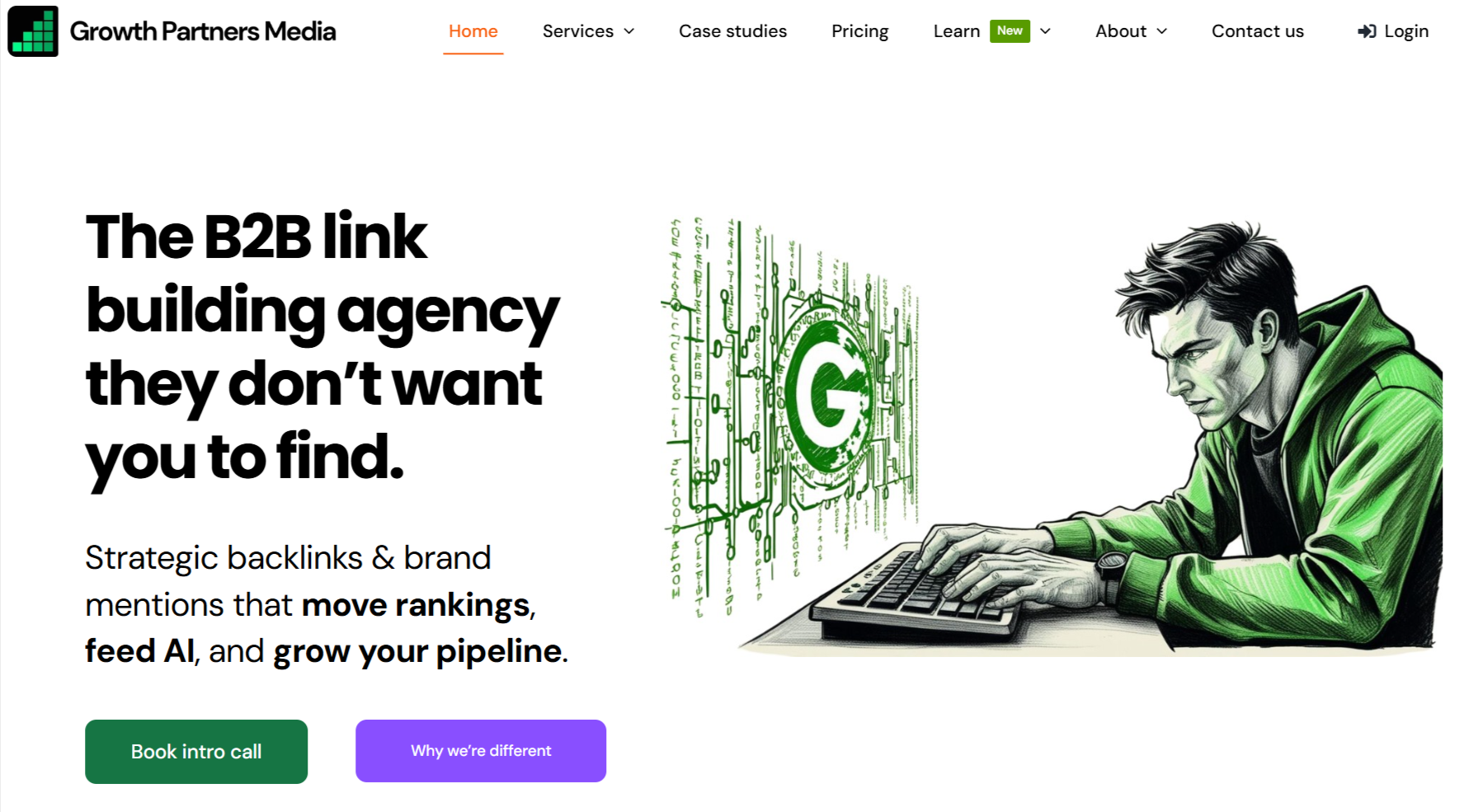
Growth Partners Media is strongest for SaaS and B2B companies that already have commercial pages worth supporting, but need more authority behind them.
That usually means bottom-of-funnel pages that are close enough to compete but not quite strong enough to break through. If those pages are sitting around positions 4 to 30, another batch of blog posts probably isn’t the first fix. The better move is usually more authority, aimed at the right URLs.
A lot of SaaS link building still works like a bulk order. Pick a Domain Rating range, choose a monthly quantity, and wait for the report. It looks clean, but it skips the harder question: which pages should get links in the first place?
GPM works from the page backward. Before building links, the team looks at the target URL, its search intent, current rankings, existing backlink profile, anchor risk, and commercial value. A homepage link might make sense in one campaign. In another, the smarter play might be supporting a buyer-intent page that already matches search demand.
The work can include guest posts, niche edits, and hybrid campaigns, depending on what the page needs. GPM also uses Herd Links, which are brand mentions and community placements across places like Reddit, Quora, and relevant forums. These mentions work best as support for editorial links, especially on platforms SaaS buyers check during research.
Good match:
SaaS and B2B software companies with commercial pages that already have decent content but need stronger authority to compete.
Less convincing for:
Teams that only want the cheapest possible link count, or companies looking for one agency to handle paid media, design, content, and SEO under the same roof.
2. Scalerrs: SaaS SEO and Link Building Under One Team

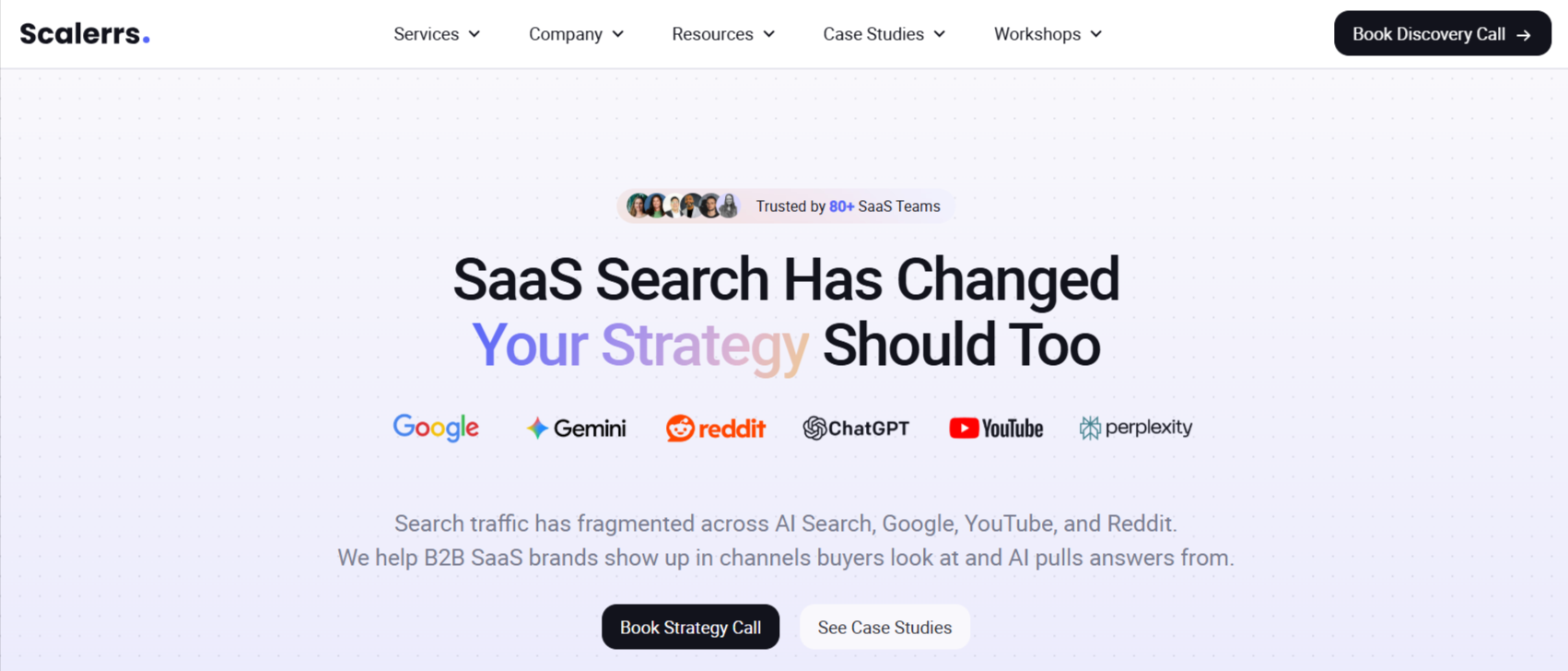
Scalerrs is a better pick for SaaS teams that want SEO and link building handled together, instead of treating links as a separate monthly order.
The agency is built around SaaS SEO, AEO, content, and link building. That focus makes it more relevant here than a generalist SEO agency that only touches SaaS occasionally. Its positioning also reflects how SaaS buyers research products now, across Google, AI search, Reddit, YouTube, and other discovery channels.
Scalerrs is most interesting when the buyer wants SEO, content, and links managed together. For a SaaS company without much internal SEO capacity, that can be useful because the link strategy is less likely to sit apart from the rest of the organic growth plan.
The main question is how link priorities are set. Their SaaS link building page talks about relevant placements, natural anchor text, link context, and reporting on which target pages move. Those are the right things to discuss, but buyers should still ask for examples: target pages, anchors, linking domains, and how the team decides which URLs deserve links first.
Good match:
SaaS companies that want one specialist team handling SEO, content, AEO, and link building together.
Less convincing for:
Teams that only need a narrow link-building campaign, or companies that already have SEO strategy covered internally and just need placements executed against a fixed plan.
3. Editorial.Link: Controlled Editorial Link Building

Editorial.Link is a good option for SaaS teams that want more control over link placements without hiring a full SEO agency.
The agency focuses on editorial link building, brand mentions, digital PR, guest posting, journalist outreach, and linkable assets. Its site lists SaaS and tech among its main industries, which makes it more relevant here than a general link vendor selling the same package to every niche.
The strongest part of the model is placement control. Editorial.Link talks about client approval before pitching, clear reporting, and flexibility around sites, anchors, and content. For SaaS teams with specific product-led pages to support, that can make the link-building process easier to manage.
This looks more like specialist link execution than a full SaaS growth strategy. That can be useful when the SEO plan is already set. A team can come in with target pages, anchor guidance, and a clear sense of what needs authority first.
The risk is treating execution as strategy. If no one has decided which pages deserve links, the campaign could still spread authority across the wrong URLs.
Good match:
SaaS teams that already know which pages need support and want more control over link approvals, anchor text, and placement quality.
Less convincing for:
Early-stage SaaS companies that still need keyword strategy, content planning, page prioritization, and broader SEO direction before links are built.
4. GrowthMate: Relationship-Based B2B Link Building
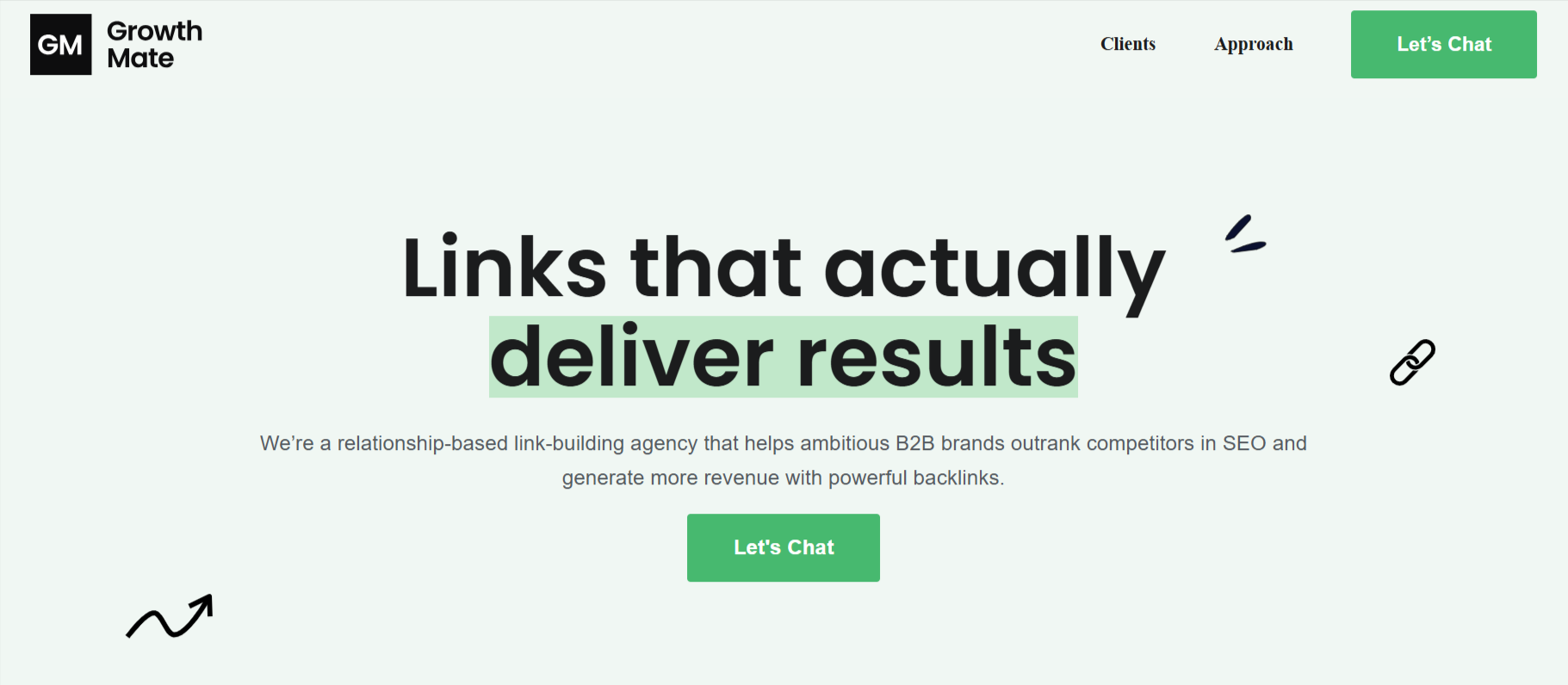
GrowthMate is a good pick for SaaS companies that want link building built around existing publisher relationships, rather than cold outreach alone.
The agency positions itself around relationship-based link building for B2B brands. Its work includes guest post contributions, listicle placements, unlinked brand mention campaigns, and links from SaaS and service websites. That makes it more relevant for software companies than a general link seller working across every niche.
GrowthMate’s clearest strength is access to relationship-led B2B placements. For SaaS teams that need links from industry-adjacent websites, partner blogs, and B2B publications, that model can move faster than building every outreach path from scratch.
The buyer still needs to check how much strategy comes with the links. GrowthMate looks strongest when the target pages and SEO priorities are already clear. If a SaaS company needs help deciding whether to support commercial pages, feature pages, or blog content first, that should be discussed before the campaign starts.
Good match:
B2B SaaS teams that know which pages need authority and want relationship-led link placements from relevant industry sites.
Less convincing for:
Companies that need a broader SaaS SEO strategy, content roadmap, or deep page-level prioritization before starting link building.
Start With the Page, Not the Agency
Most SaaS companies compare link building agencies too broadly.
They ask about Domain Rating, monthly volume, price per link, and turnaround time. Those questions matter, but they come too late if the team has not decided which pages actually need authority.
A comparison page stuck around positions 5 to 12 needs different support than a homepage, a new content asset, an integration page, or a competitor alternative page. The agency choice gets much easier once the page type is clear.
For commercial pages, look for an agency that can talk about anchors, link context, topical relevance, and page-level risk without turning everything into a fixed package. For content assets, look for a team that understands why people would cite the page in the first place. For broader brand visibility, digital PR or relationship-led placements may make more sense.
The wrong agency usually shows up early in the conversation. If every page gets the same plan, the same anchor mix, and the same explanation, the campaign is probably being sold as delivery rather than strategy.
Before choosing a SaaS link building agency, pick the pages that matter most. Then ask which agency is actually built to help those pages move.
The Bottom Line
There is no single SaaS link building agency that makes sense for every company.
A team with strong commercial pages but weak authority has a different problem from a team that needs SEO, content, and links handled together. A company that wants controlled placement approvals also needs a different model from one that values relationship-led B2B links.
The better question is simple: which agency understands the pages that need to rank, the buyers those pages need to reach, and the risk that comes with forcing links into the wrong places?
Growth Partners Media is strongest when page-level authority and commercial intent are the main problem. Scalerrs makes more sense when SEO, content, AEO, and links need to be handled together. Editorial.Link is better for teams that want controlled execution around specific placements. GrowthMate suits companies that value relationship-led B2B links and already know where authority is needed.
Start with the pages that matter. Then choose the agency whose model matches the job.

Amir Zarandouz is a digital marketing specialist with 15+ years of experience across SEO, PPC, CRO, and web design. A former Head of Digital Marketing and Marketing Director, he now runs his own consultancy, helping businesses scale through tailored, data-driven strategies and modern digital execution.